Introduction: The Slow Retreat
This series retells Joseph François Michaud’s 1812–1822 History of the Crusades*, including his own framing of the Crusades as a defensive civilizational response. That framing is Michaud’s argument, not a neutral modern consensus — historians remain divided on the balance of religious, defensive, and expansionist motives behind the Crusades.*
By the thirteenth century, the crusading spirit was changing. While the ideal of defending the Holy Land remained, the military outposts of Outremer (the Crusader States) were increasingly squeezed by the rise of the Mamluk Sultanate of Egypt.
In Volume 3 of his History of the Crusades, Joseph François Michaud details the final acts of the crusading drama. It was an era of diplomatic maneuvers, the deeply devout but tragic expeditions of King Louis IX (Saint Louis), and the final, heroic stand of the military orders at the Siege of Acre in 1291.
1. The Seventh Crusade: The Devotion of Saint Louis (1248–1254)
King Louis IX of France (Saint Louis) was the model of the medieval Christian king—deeply pious, just, and brave. Following a severe illness, he vowed to lead a crusade to reclaim Jerusalem by striking at the heart of Ayyubid power: Egypt.
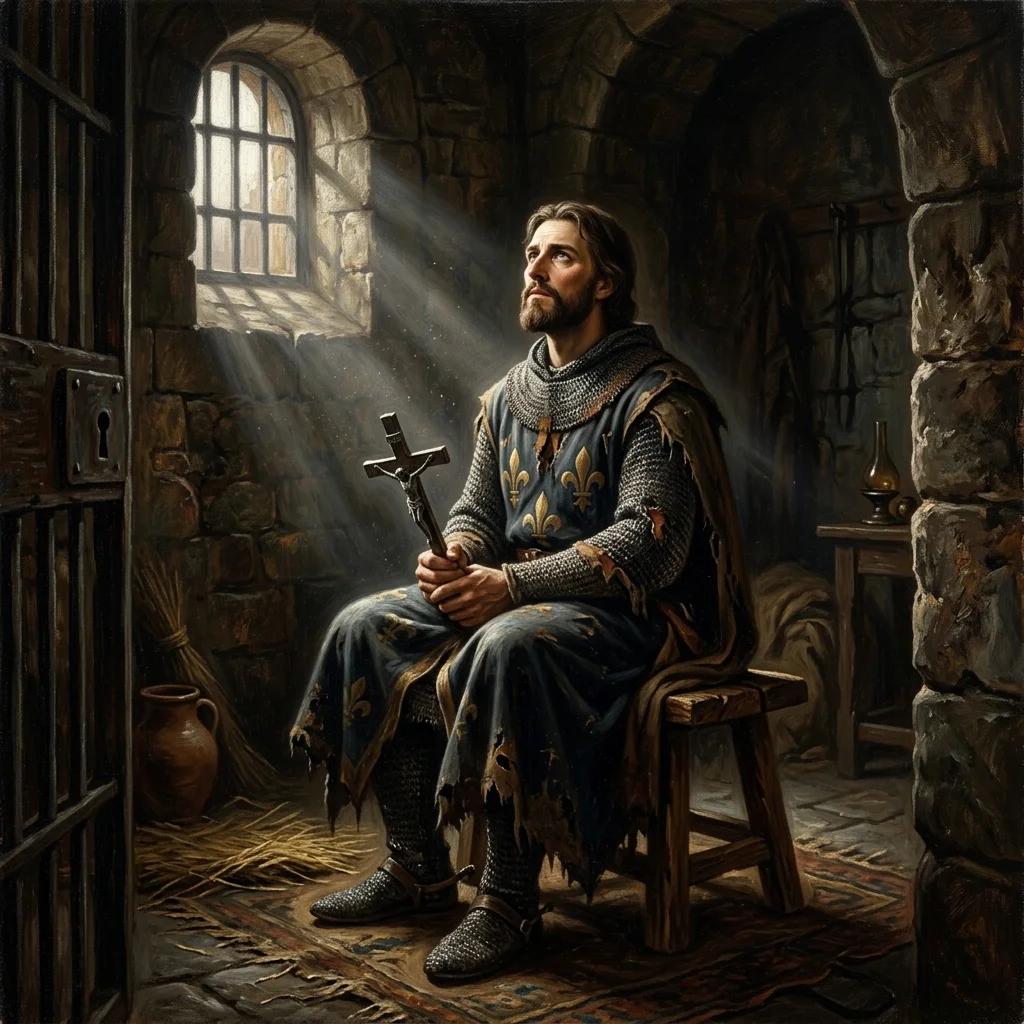
Saint Louis Captive in Egypt
The Devotion of the King (1250)
Key Takeaways
- 1 High initial success with the capture of Damietta (1249).
- 2 Disaster at Fariskur due to disease and tactical mistakes.
- 3 Louis's stoicism in captivity and ransom for Damietta.
The Crusade began with the successful capture of the port of Damietta. However, during the march inland toward Cairo, the army was trapped by flooding, disease, and Mamluk forces at the Battle of Fariskur. Louis was captured alongside his nobles. Throughout his captivity, Louis maintained a dignified, stoic faith, eventually ransoming his army by returning Damietta and paying a massive sum.
2. The Eighth Crusade and the Death of a King (1270)
Undaunted by his prior failure, Louis took the cross again in 1270. This time, he landed in Tunis, hoping to convert the local emir or establish a base to attack Egypt.
Instead, a devastating epidemic of dysentery swept through the Christian camp. Saint Louis himself succumbed to the disease, dying on his knees while whispering prayers for Jerusalem. His death marked the end of the last major royal expedition to the East.
3. The Fall of Acre: The Heroic Last Stand (1291)
With the European monarchs distracted by domestic conflicts, the Mamluk Sultan al-Ashraf Khalil resolved to wipe out the remaining Christian outposts. In April 1291, a massive Mamluk army besieged Acre, the wealthy capital of the surviving kingdom.
The Siege of Acre (April–May 1291)
Comparing the opposing forces at the final stand of Outremer
Against overwhelming odds, the Knights Templar, Knights Hospitaller, and local forces held the walls for weeks. When the Mamluks finally breached the Accursed Tower on May 18, Grand Master William of Beaujeu fell mortally wounded.
The remaining Templars retreated to their fortified castle on the shore. They refused to surrender, holding out for another ten days until the undermined walls collapsed, burying the last defenders and their attackers under the rubble.
Conclusion: The End of an Era
The fall of Acre marked the end of the Christian presence in Outremer. The crusader states had vanished, but the legacy of their struggle—the ideals of chivalry, devotion, and civilizational defense—left an indelible mark on Western Europe. As Michaud concludes, the Crusades ultimately unified the West, catalyzed the growth of maritime commerce, and protected Europe during its formative medieval centuries.